CS2 Retake Arrivals: Connect the Routes Before the Final Push
A retake begins before players reach the site edge. Compare arrival timing, information and utility so that the team does not feed separate entries into the same defended area.
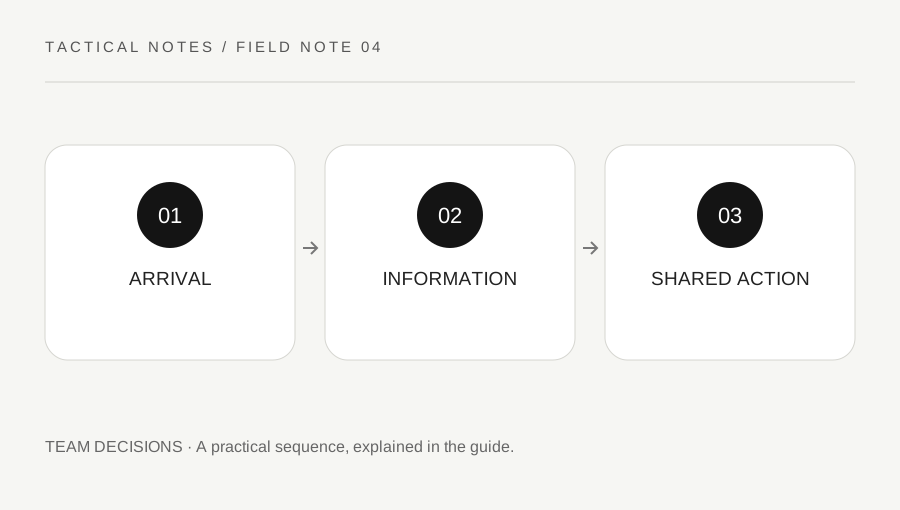
Original explanatory diagram. Examples illustrate a method or decision; they are not claims of personal testing.
Read the remaining task and time
Identify the objective state, remaining teammates and the information actually available. The site's plant-and-defuse guide covers the core objective. This page focuses on how arriving players connect their routes before attempting the final action.
Do not use one remembered timing as a universal permission to continue. Equipment, route length and current rules affect what is feasible. Read the actual round and communicate the practical constraints rather than promising that every late arrival can still succeed.
An opponent's earlier location is not necessarily current. Keep old information labeled as old, and distinguish a confirmed visible target from a likely position. A retake plan built on an outdated assumption can expose several players before anyone realizes the angle changed.
Compare who arrives when and where
Name the routes teammates are using and what each can see. Two players reaching different openings at different times may not create simultaneous pressure. A short deliberate wait can sometimes connect the arrivals, while other situations require immediate action.
Avoid entering alone merely because you arrived first. Also avoid waiting without checking whether the objective window permits it. The useful decision weighs support and urgency together instead of applying one slogan to every retake.
For a worked example, one player reaches a site entrance while a teammate is still several turns away. The first player holds a useful boundary and provides information until a shared action is feasible, rather than repeatedly peeking the entire site and losing the only available supporting position.
Assign utility a practical follow-up
If utility is available, name the angle or route it is meant to affect and the movement that follows. A grenade thrown without readiness can use the resource before teammates can act. Check the current map geometry and supported interactions instead of relying on an old lineup blindly.
Keep the call short: location, intended effect and timing. Teammates need enough information to avoid crossing into the wrong sightline or waiting for an effect that has already ended. Observe the actual result before treating the angle as solved.
If an opponent changes position or another player is eliminated, update the plan. A retake is a sequence of changing information, not a fixed animation the team must complete because the first call was made. Preserve the possibility of a different objective decision when the situation no longer supports the original entry.
Review the connection between entries
Afterward, compare the moments each teammate could contribute. A final mechanical miss may matter, but first ask whether the team ever created the intended shared pressure. If not, identify the arrival, call or utility timing that broke the connection.
Use a suitable practice or Retakes environment when available under current rules. Do not assume a custom mode reproduces every economy and objective condition of a full match. State the skill being isolated and check transfer later.
Finish with one correction that can be observed next time: announce the route earlier, preserve a boundary until support arrives or confirm readiness before utility. A useful retake plan connects the paths and time that players actually have, while keeping the objective and new information in control of the final decision.
A useful route call includes the entrance and the moment you can contribute. Saying only that you are close can hide a remaining corner or utility delay that changes the shared entry.
A practical checklist
Choices are saved in this browser. Reset them here or clear this site’s browser storage.
Questions that come up
Should the first arrival always push immediately?
No universal rule applies. Compare support, information and the objective window.
Does an old opponent call remain confirmed?
No. Label its age and update when new evidence appears.
Does a custom retake mode reproduce every match condition?
Not necessarily. Use it for a named skill and check transfer into the intended match rules.
References & scope
Background references checked on 18 October 2026. Worked examples and diagrams are original teaching material.