CS2 Recoil and Burst Practice: Build Control Without Memorising Everything
Recoil practice works best when you can explain what caused a missed sequence. Movement, initial aim, burst length and range all matter, so firing whole magazines at a wall without a question teaches less than a short controlled drill. This guide offers original practice routines for CS2, with official references checked on October 18, 2026. Weapon values and options may change. The legacy Valve resource concerns transferable firing concepts; it is not evidence that a historical spray or timing remains identical.
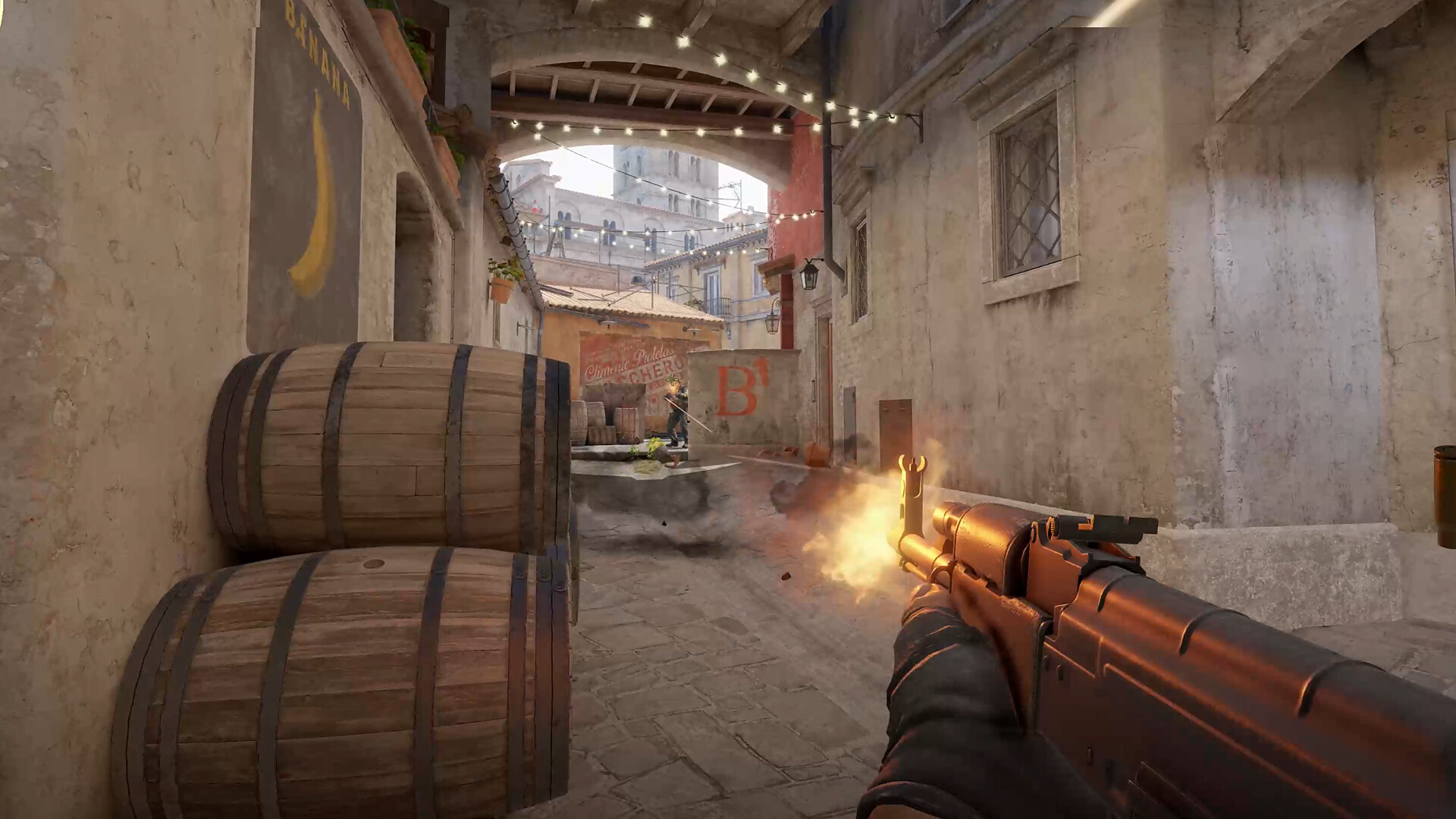
Official game screenshot · Valve. Publisher-provided public store media used to illustrate independent editorial discussion. Copyright remains with the respective rights holders; no redistribution license is offered.
Choose one weapon and one distance first
Begin with a rifle you actually use in normal rounds rather than rotating through the entire arsenal. Stand at a consistent distance from a clear practice surface or target, and keep the same movement state while comparing attempts. Do not add several attachments, sensitivity changes or custom training modifications simultaneously. The aim is to recognise how this weapon behaves under ordinary conditions. A close spray and a distant burst solve different problems, so give them separate drills. If you cannot place the first deliberate shot where intended, spend time on initial aim before trying to correct a long sequence of later bullets.
Observe a baseline before compensating
From a stationary position, fire a short controlled sequence without trying to correct every movement. Observe the impact grouping available in your practice environment. Then repeat while applying a modest adjustment and compare the result. Avoid assuming the visible crosshair always represents the complete spread of shots; understand the crosshair setting you selected. Keep any built-in feedback option consistent during a comparison. This guide does not require console configurations or third-party recoil automation. A useful baseline tells you whether the group rises, widens or begins off target, which leads to different next actions rather than one universal instruction to pull down harder.
Separate stopping errors from firing control
Perform a sideways move, release or counter the movement normally, wait until you are settled and fire a short burst. Repeat with an intentionally rushed shot for comparison. If the first shot is unreliable only after moving, the main problem may be the transition to a stop rather than the recoil pattern. Practise a deliberate pause first, then gradually reduce wasted time while preserving control. Do not chase speed by relying on an input macro. In matches, use cover so you can stop for the shot without remaining visible to several opponents. Mechanical accuracy and a safe shooting position need to develop together.
Build a burst you can repeat at the intended range
Aim at one clear point, fire a brief burst, release and allow the weapon to settle before the next attempt. Choose a burst length you can keep controlled rather than a fixed count copied from an old guide. As distance increases, shorten the sequence or use deliberate individual shots if that gives clearer control. Watch whether later bullets leave the useful target area. If they do, end the burst sooner instead of continuing to hope the target remains in it. Practise reacquiring the same point after each reset. This makes the interval between bursts part of the skill, not empty time.
Add a sustained spray only for a reason
A longer spray can be practical at short distance or when a committed encounter leaves little time to reset. It should not become the default response to a distant opponent behind cover. Practise a manageable segment of the pattern and extend it only when the beginning stays controlled. Reset your position between attempts so random movement does not confuse the comparison. If transferring to a second target, recognise that changing targets introduces another skill: you must move the controlled firing region while managing recoil. Learn one target first. Avoid promising yourself that memorising a diagram removes weapon inaccuracy or poor positioning.
Transfer the drill to a realistic peek
Choose cover in practice and rehearse stepping out, stopping, firing a controlled sequence and returning. Keep your crosshair near where the opponent would appear before exposure begins. Add a second target only after you can finish the first action without reloading in the open. In live play, select encounters that fit the weapon and distance you practised. If an opponent escapes behind a wall, do not keep spraying out of frustration while the team needs you elsewhere. Review whether the first burst was on target and whether you had an exit, rather than judging the drill solely from a final elimination count.
Use a short troubleshooting loop
If the entire group starts off target, improve pre-aim or sensitivity control. If the first shot is good but later shots rise away, shorten the burst or adjust the recoil correction. If results become poor after every sideways step, return to stopping practice. If the drill looks fine but live fights fail, inspect crosshair placement, range and the number of angles exposed. Keep a brief note naming the problem and the next drill. Finish while you can still pay attention. A small number of deliberate repetitions with useful feedback is preferable to an exhausted hour of repeating the same uncontrolled error.
Your working checklist
Checkmarks stay in this browser when storage is available. They do not alter your game or connect to your account.
Put it into practice
- Establish a stationary baseline and observe the first shot separately from later bullets.
- Compare a short burst with a longer sequence at the same distance and movement state.
- Practise stopping before firing if movement causes the first-shot error.
- Add cover, a deliberate peek and a retreat instead of only firing from an open practice position.
- Name the repeated error and choose a single drill adjustment for the next session.
Before you finish
- Initial aim, movement accuracy and recoil are evaluated separately.
- Burst length fits the distance and your current ability to keep shots useful.
- No script or external program is compensating for recoil.
- The practice result transfers to a peek with cover rather than only an unrestricted wall spray.
Common questions
Do I need to memorise a full spray pattern immediately?
No. Establish reliable first shots and short bursts with one weapon before extending the sequence. A full pattern is another tool, but it does not replace choosing a sensible distance, stopping properly or keeping your crosshair near the target.
Should I change sensitivity when my spray is poor?
Only if you can identify a consistent aiming-control problem. If the first shot is accurate and later bullets escape, burst length or recoil correction is a more direct question. Hold settings steady while testing those variables.
Why can I hit targets in practice but miss in matches?
A live opponent moves, changes cover and pressures your decisions. You may also be shooting while moving or exposing multiple angles. Add a simple peek and retreat to the drill, then review the first decision in the fight rather than only the eventual result.