CS2 Crosshair Placement: Clear Angles With Less Emergency Flicking
Good crosshair placement reduces the correction needed when an opponent appears. It is not a promise that every opponent will stand at one height or one exact pixel. This guide develops an original practice method for ordinary CS2 map play, with official references reviewed on October 18, 2026. Map geometry changes and historical CS:GO examples require rechecking. The central skill is connecting current terrain, likely enemy positions and controlled movement before the duel begins.
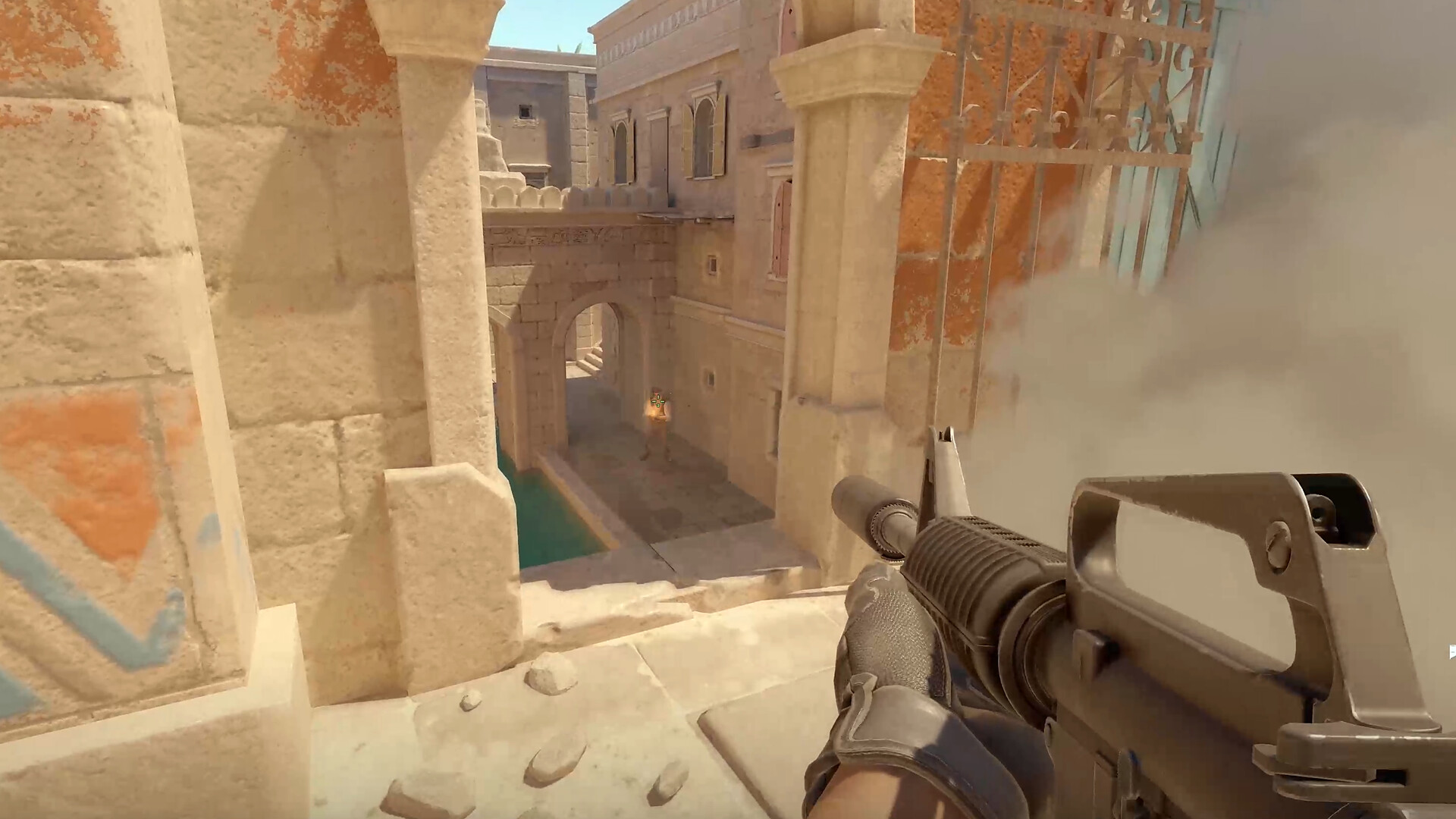
Official game screenshot · Valve. Publisher-provided public store media used to illustrate independent editorial discussion. Copyright remains with the respective rights holders; no redistribution license is offered.
Place the crosshair where the next threat can appear
While moving, choose the most immediate uncleared angle and keep the crosshair near the plausible opponent position there. Avoid looking at the floor between encounters and then making a large vertical correction when someone appears. The expected height depends on elevation, stairs, crouched positions and distance, so use actual map geometry rather than a fixed screen level. A door frame or familiar wall feature can help you calibrate in practice. Do not stare at a distant interesting angle while walking past an unchecked nearby corner. The priority is the threat that can damage you next.
Clear one angle without opening several at once
Approach cover so each small movement reveals a manageable portion of the space. Before exposing more of your character, decide which position you are checking and where you can retreat. If a wide step reveals three separated enemy positions simultaneously, you have created several possible duels even if your crosshair placement is good for one. Use a teammate or utility to reduce the unmanageable angles when necessary. There is no rule that every corner should be cleared at the same speed. Urgency, the round timer and known enemy information affect how much caution is possible.
Account for how quickly an opponent can enter the angle
When holding an angle, leave a practical amount of room for the opponent's movement and your own response. Holding directly against the edge may require a correction behind a fast-moving player, while holding too far away can expose you to a slow careful peek. Test the relationship in practice with a partner when available, or review actual encounters in a demo. Distance and the width of the passage matter. Treat the hold as a decision about a likely movement, not a decorative crosshair position. If an opponent repeatedly defeats the same static hold, change position or coordinate a different angle instead of repeating it unchanged.
Use map knowledge to reduce the guessing
Walk a familiar route in practice and identify the positions an opponent can reasonably occupy before you advance. Name each one using current callouts or simple shared descriptions. Then rehearse moving the crosshair between them in a logical order. Do not pre-aim a historical location that no longer exists after a map update. The purpose is to learn relationships: a raised platform requires a different height from a lower doorway, and a close corner is reached before the distant site. Knowledge lets the crosshair arrive early, but you must still react to evidence that changes the likely threat.
Coordinate the angle with a teammate
Two players can cover complementary spaces rather than both staring at the same doorway while leaving a flank open. Agree on the immediate responsibility in plain language. When following an entry player, keep enough room to move and see a trade opportunity without blocking their retreat. Watch the angle that can punish them, not the back of their character. If they clear a position, your crosshair should move to the next unresolved problem. Avoid treating a teammate's presence as proof the area is safe; they may be looking elsewhere or responding to a different threat. Confirm important information through a short call or radar check.
Practise a route with a visible standard
Pick a short route containing several different heights or cover shapes. Walk it slowly, stop at each reveal and identify the expected opponent position before moving again. Repeat at a normal pace, preserving the order and avoiding unnecessary floor aim. Then add a practice opponent or a live mode where you can focus on that same route. Your measurement is whether the initial crosshair was close enough for a small correction, not whether every duel was won. If you lose despite good placement, inspect timing, weapon readiness and exposure. Do not automatically change the crosshair because an opponent simply aimed better in one encounter.
Fix the first misplaced aim in the sequence
In a replay, pause just before contact and ask where your crosshair was, what position you expected and whether that expectation fit the available information. If you were looking at the floor, practise maintaining height between angles. If you aimed at the correct height but the wrong doorway, improve the clearing order or communication. If you were watching two directions alternately and hit from the other, choose a safer position or involve a teammate. This diagnosis turns a vague instruction to aim better into a specific decision you can rehearse. Keep one short lesson per route rather than memorising a huge catalogue immediately.
Your working checklist
Checkmarks stay in this browser when storage is available. They do not alter your game or connect to your account.
Put it into practice
- Identify the nearest unresolved threat and place the crosshair near its plausible player position.
- Reveal one manageable angle at a time while preserving an exit behind cover.
- Adjust height for actual terrain and allow for the opponent movement you expect.
- Coordinate complementary angles with teammates rather than duplicating every hold.
- Review the pre-contact frame and correct the first misplaced aim or mistaken expectation.
Before you finish
- The crosshair stays relevant while travelling rather than returning to the floor.
- Elevation and possible crouched positions are considered instead of assuming one universal height.
- A peek does not unnecessarily expose several separated angles at once.
- Practice evaluates initial placement separately from whether the final duel was won.
Common questions
Should the crosshair always be at head height?
Prepare for the likely opponent position, but account for stairs, platforms, crouching and distance. A fixed horizontal line on the screen cannot solve every elevation. Use current map geometry and what the opponent can actually do.
Why do enemies run past my held crosshair?
Your hold may be too tight for their movement and your response time, or your expectation may be wrong. Compare the actual angle in practice or a replay. Adjust the hold or position deliberately rather than moving the crosshair randomly between attempts.
Can good placement replace aim practice?
It reduces the correction required but does not remove tracking, recoil, stopping or reaction demands. Combine a short route-clearing drill with controlled shooting practice. The skills support one another; neither makes poor exposure or missing information harmless.