CS2 First-Match Setup: Controls, Practice and Your First Objective Round
Counter-Strike 2 asks you to coordinate careful shooting, map information and a round objective. A useful first session separates those tasks instead of beginning with complicated tactics. This guide focuses on ordinary bomb-defusal play. Official references were reviewed on October 18, 2026. Valve's older CS:GO learning resource is identified as a historical conceptual source, not a current rulebook. Use the current CS2 client for mode rules, prices and menu labels; the exercises below are original learning suggestions.
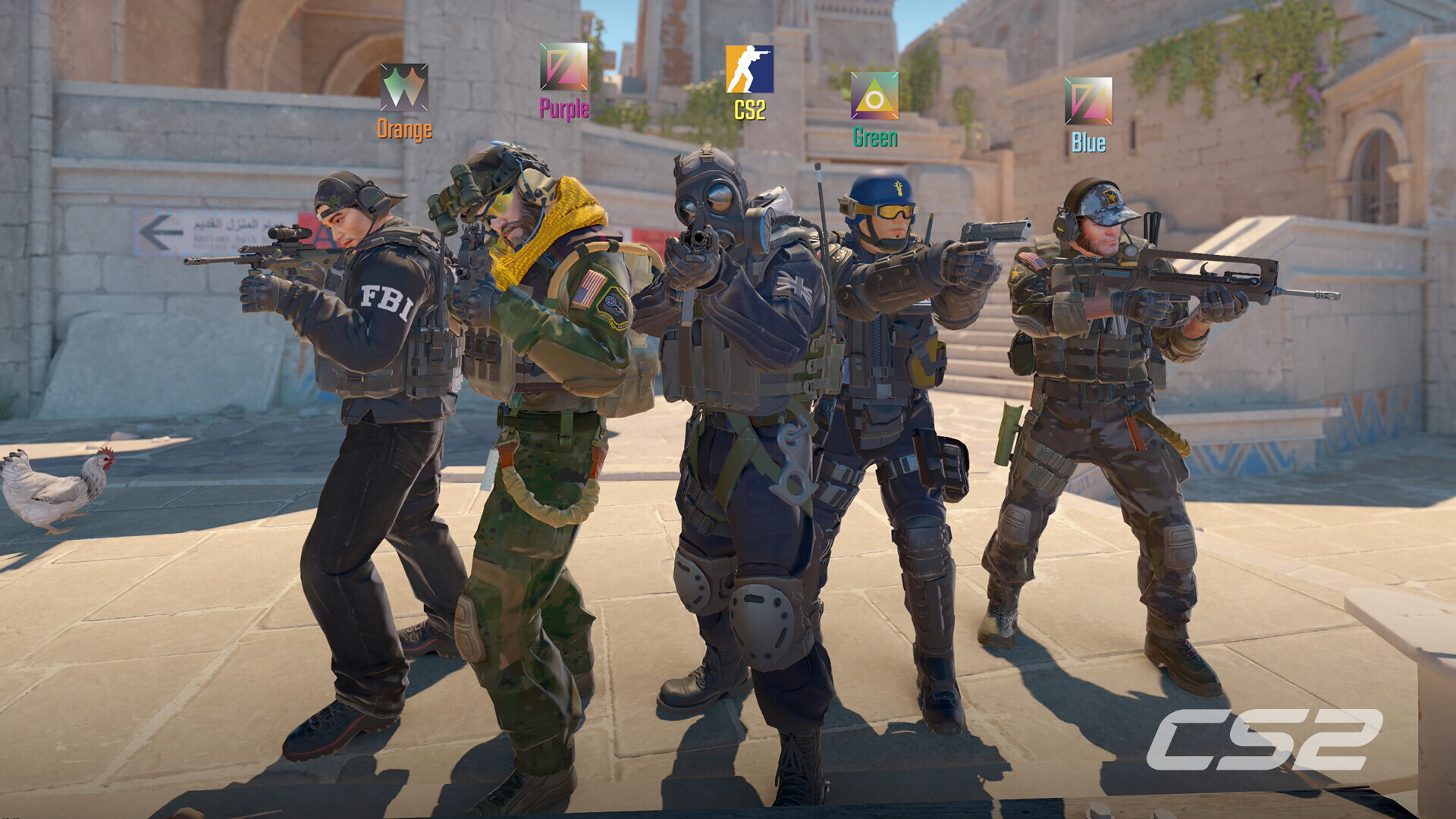
Official game screenshot · Valve. Publisher-provided public store media used to illustrate independent editorial discussion. Copyright remains with the respective rights holders; no redistribution license is offered.
Check the installation and choose a learning mode
Install through the legitimate Steam listing, update the game and verify that your system meets the requirements displayed for your platform. Avoid third-party launchers that promise better matchmaking or free paid status. Before queuing, read the mode description and choose a session you have time to finish. Practice and respawn-based play can help you learn inputs, while a bomb-defusal round teaches a different sequence of decisions. Do not treat a Deathmatch score as proof that you already understand team objectives. Decide what you are learning in this session so a difficult first match still produces a useful result.
Make vision and sound usable before changing advanced options
Choose display settings that keep the game responsive and opponents distinguishable on your own hardware. A stable readable experience is more valuable than copying a professional player's resolution without understanding the trade-off. Set game sound at a comfortable level and lower unrelated background audio that masks relevant cues. Test voice input if you intend to use it, and learn the mute controls before encountering a disruptive player. Adjust the crosshair so it remains visible on both dark and bright backgrounds. Keep changes modest, then practise; changing several settings after every missed shot makes it difficult to identify the real problem.
Learn the small group of essential actions
Locate movement, walking, crouching, jump, fire, reload, weapon selection, grenade selection, use, buy menu, scoreboard and communication. In bomb-defusal play, understand how the carried bomb and the use interaction appear in the current interface. Test that you can select the intended grenade without cycling through the wrong item while exposed. Keep your bindings ordinary and supported; this guide does not require scripts, automated actions or external aim software. If an action is hard to reach, change that binding during practice rather than discovering the problem while teammates wait for a plant or defuse.
Practise stopping before accurate fire
In a quiet practice setting, aim at a small fixed feature, move sideways, stop and then fire a deliberate shot. Compare this with firing while still moving, observing how your results differ with the weapon in hand. Start slowly so you can separate stopping, aiming and shooting. Add a short burst only after the first shot is controlled, then allow the weapon to settle before repeating. The objective is a repeatable sequence, not the fastest possible input combination. Avoid teaching yourself to crouch and empty a magazine whenever surprised; that can leave you stationary with no good exit in a real encounter.
Understand the round objective before chasing opponents
In a bomb-defusal round, the attacking side tries to create a plant and defend it, while the defending side tries to prevent that objective or complete a defuse after a plant. The active timer and living players change the correct decision. After planting, an attacker may help more by holding a useful angle than by chasing a distant elimination. A defender should communicate a confirmed bomb location rather than rotate solely because of one sound. Read the current rules for your selected mode. Historical CS:GO match lengths and economy descriptions should not be copied into CS2 as if nothing changed.
Take one manageable team responsibility
At the start of the round, ask where the team intends to go and choose a simple responsibility you can perform: follow the entry with a trade angle, carry the bomb safely, watch a flank or hold a named defensive route. Do not attempt to lead an unfamiliar map from memory. Stay close enough to help without standing directly behind a teammate and blocking retreat. Give concise information about a seen opponent, using a map location and direction when possible. If you die, report what you actually knew at that moment, then let living teammates hear the game instead of narrating every possible enemy move.
Review one mechanical and one objective error
After the session, choose a single aim or input issue and a separate round-decision issue. For example, you may have fired before stopping and then chased after a plant instead of defending it. Practise the stopping sequence briefly, and use the next match to hold a useful post-plant angle. Do not solve both problems by buying an expensive peripheral or changing every setting. If the map felt confusing, walk a route in practice before queuing again. A successful first learning session means you can buy deliberately, identify the objective and support another player, even if your elimination count remains modest.
Your working checklist
Checkmarks stay in this browser when storage is available. They do not alter your game or connect to your account.
Put it into practice
- Inspect the selected mode, then test movement, item selection, use and communication in practice.
- Set readable settings and a stable sensitivity that permits small controlled corrections.
- Rehearse move, stop, aim and fire before trying longer bursts.
- In a live round, buy with the team and accept one clear objective-related responsibility.
- Review one mechanical mistake and one round-decision mistake before the next session.
Before you finish
- The selected mode and objective are understood rather than inferred from another shooter.
- You can select a weapon, grenade and use interaction without searching the keyboard.
- Your settings remain stable long enough to learn, and no external automation is required.
- Team information is factual and brief, including after elimination.
Common questions
Should I begin immediately in the most competitive queue?
Start where you can learn the controls and current rules without taking on every unfamiliar system at once. Practice and simpler live modes help with inputs, but you will still need objective-based matches to learn buying, trading and site play.
Do skins or expensive items make shooting better?
This guide is about normal gameplay decisions and does not recommend cosmetic spending as a performance improvement. Learn movement, crosshair placement, weapon handling and team communication before considering whether any purchase has personal entertainment value.
Why does an older tutorial show different menus or rules?
CS2 has changed since CS:GO and continues to receive updates. Use old material for clearly transferable ideas, then verify the current mode, map and controls in the client. Avoid copying historical match lengths, prices or lineups without checking them.