CS2 Player Advantage: Preserve Useful Connections After the Opening
An extra player is an opportunity, not a completed round. Recheck the objective, remaining angles and support before giving the opponent a series of isolated encounters.
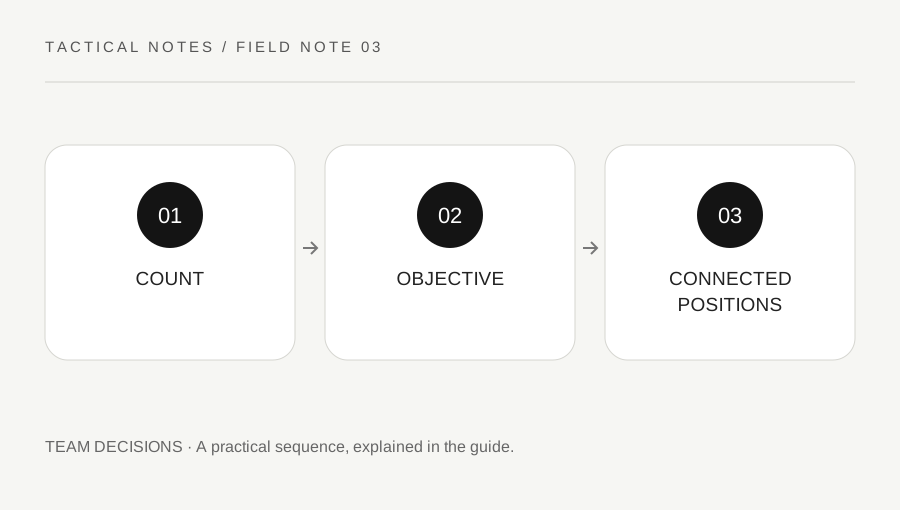
Original explanatory diagram. Examples illustrate a method or decision; they are not claims of personal testing.
Confirm the state rather than relying on the call
Check the current living-player information, objective state and time. An earlier advantage can disappear while the team talks about it. Keep the update concise and accurate rather than repeating an old count after another exchange.
An advantage does not mean every position is safe. The remaining opponent can hold a useful angle, the bomb can force action or teammates can be too separated to help. Read the actual round rather than using the count as a complete strategy.
This guide is an original decision routine and does not promise one correct response to every numerical situation. Map geometry, equipment and objective conditions matter. The useful first step is identifying what the advantage allows the team to do together and what unnecessary risk could remove it.
Avoid offering isolated duels
Inspect whether teammates can respond to each other's contact. Two players on opposite sides of a wall may be nearby without a useful trade. A third player chasing alone can turn the advantage into several separate encounters.
Choose positions whose views and timing connect. This does not require everyone to stack one doorway; that can expose several players to the same threat. The site's trade-spacing guide explains the geometry in more detail. Here the goal is preserving the numerical opportunity while fulfilling the round objective.
For a worked example, a team gains an opening elimination and then three players independently push different unknown lanes. The review identifies the loss of support as the problem, even if one of those players deals damage. The advantage was spent through disconnected decisions rather than converted into a shared position.
Let the objective determine urgency
A defending team and an attacking team can face different time pressures even with the same player count. Recheck what must happen for the round to be won. Holding a useful area may be correct in one state, while another requires a coordinated move.
Avoid the slogan that an advantage always means waiting. Waiting can waste a required objective window. Equally, an advantage does not require rushing to finish the remaining opponents. State the actual task and the information needed for it.
If new contact changes the situation, update the count and plan. Do not continue a call based on a state that no longer exists. Keep teammate positions and available utility visible in the conversation rather than reducing every decision to the kill feed.
Review how the advantage was used
After the round, mark the first action taken after gaining the advantage. Ask whether it improved the objective position, created a connected view or exposed a player without support. This point often provides a clearer correction than the final lost duel.
Choose one next-session constraint, such as confirming the objective and support before extending into another lane. Keep it flexible enough for real urgent situations. A practice habit should improve awareness rather than prohibit a necessary action blindly.
Finish with one sentence describing the conversion: advantage gained, useful position secured or connection lost. This makes the round review specific. A numerical edge becomes valuable through the decisions that follow it, so the learning task is preserving options and support while still acting on the objective's real demands.
A practical checklist
Choices are saved in this browser. Reset them here or clear this site’s browser storage.
Questions that come up
Does an advantage always mean playing slowly?
No. The objective and time can require action. Avoid both unnecessary rushing and waiting that loses the needed window.
Should everyone stand together?
Not necessarily. Connected positions can be spread, while stacking can create shared exposure.
Does one lost duel prove the advantage was wasted?
Review the whole decision chain. Position, support and objective progress matter alongside the final shot.
References & scope
Background references checked on 18 October 2026. Worked examples and diagrams are original teaching material.